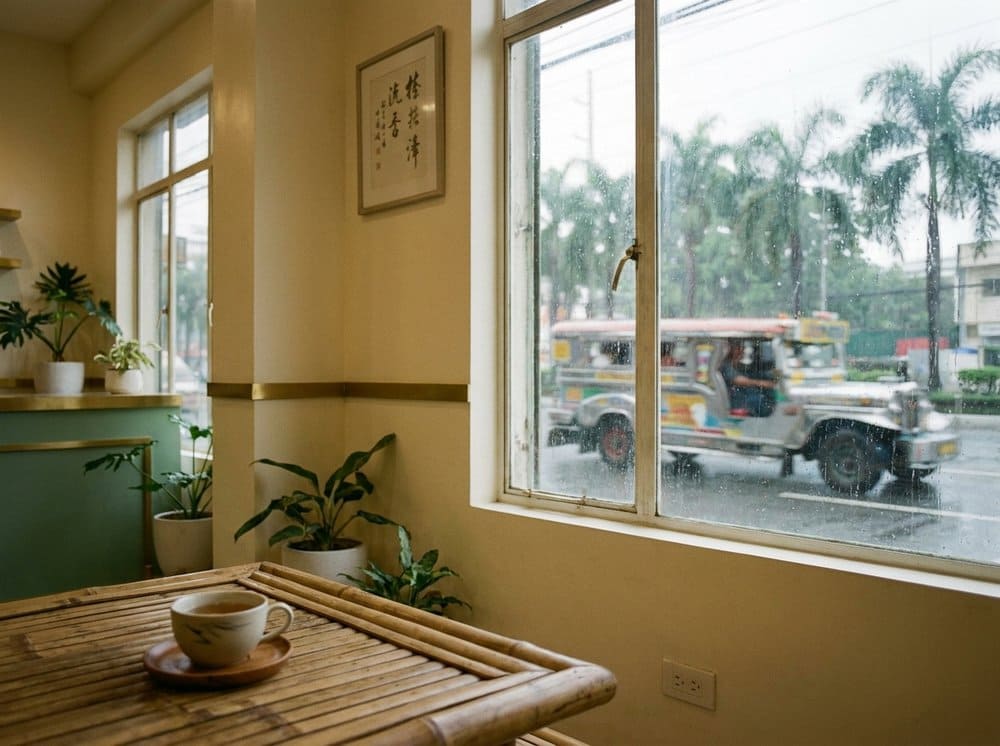
When a patient arrives at our Legazpi Village clinic and says "I have arthritis," the Western label has already done most of its work. It tells us roughly which joint surfaces are affected, sometimes which antibody is elevated, and very little about what the body is doing in response. Traditional Chinese Medicine begins its reading exactly where that label ends. We do not ask, first, what is the disease? We ask, what pattern of disharmony is this joint expressing right now, in this person, in this season?
That shift — from disease naming to pattern differentiation — is the single most important thing to understand about how TCM works with chronic joint pain.
The classical frame: Bi-zheng, the blocked channel
The Huangdi Neijing, compiled sometime between the Warring States and early Han periods, devotes Chapter 43 of the Suwen to painful obstruction — bi-zheng (痹證). The character 痹 carries a sense of numbness, blockage, a channel that cannot move freely. The text is remarkably precise: "When wind, cold, and dampness arrive together in mixture, they conjoin and form bi." Two millennia of commentary refined that observation into a clinical grammar we still use every week at the table.
The grammar runs on three questions. First: which climatic quality has lodged in the channel — wind, cold, damp, or heat? Second: is the obstruction at the skin and sinew, or has it travelled deeper into bone and organ? Third: is the patient's zheng qi — their upright, defensive energy — strong enough to push the intruder out, or has it been worn thin by years of the struggle? A careful answer to those three questions produces a treatment plan. A wrong answer produces a year of expensive massages that do not help.
Damp-cold bi versus wind-heat bi: two joints, two worlds
Two patients can walk in on the same Tuesday, both diagnosed by their rheumatologist as osteoarthritis of the knee. In a Western sense they have the same disease. In a TCM sense they are suffering from almost opposite patterns, and the treatments will look almost opposite as well.
Damp-cold bi (寒濕痹)
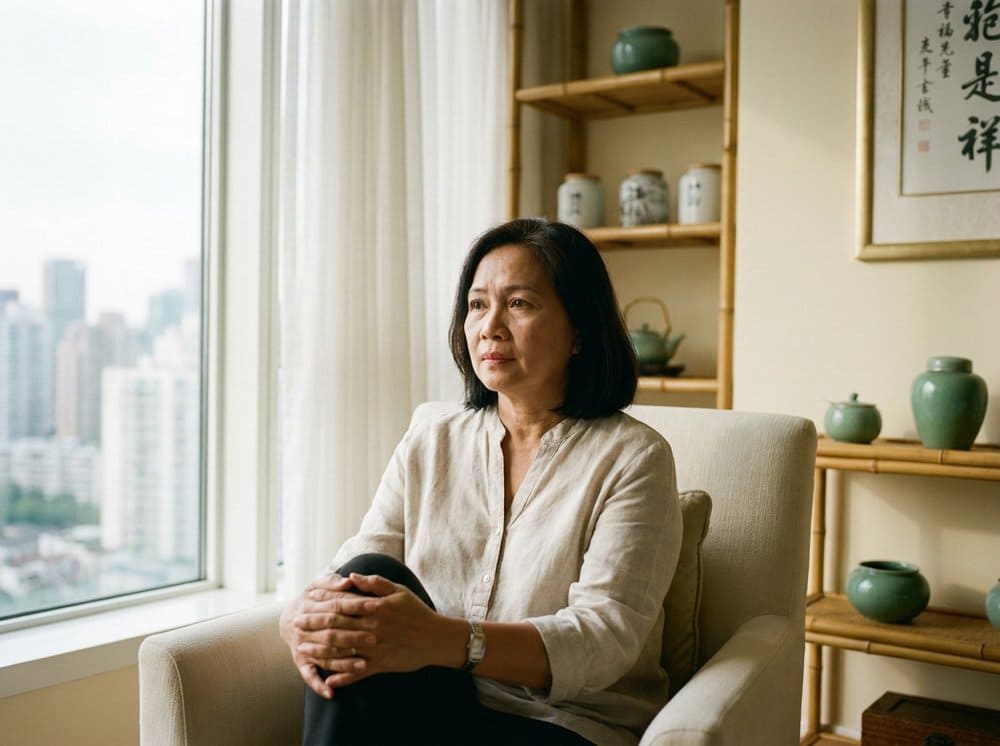
The first patient is a sixty-two-year-old accountant who lives in a high-rise with aggressive air-conditioning. Her right knee is stiff and heavy in the morning. It loosens, but never fully, after about forty minutes of walking. Cold weather — a mall, a long jeepney ride past an open window — makes the pain worse. A warm towel makes it better. On palpation the joint feels cool, puffy, and slow to respond. Her tongue is pale with a thick white coating; her pulse is deep, slow, and slightly wiry. This is damp-cold bi. The channel is clogged with a cold, viscous pathogen. Treatment calls for warming methods: moxibustion over Zusanli and the local knee points, warming herbs such as gui zhi and fu zi in measured doses, and careful avoidance of cold drinks and cold showers during flares.
Wind-heat bi (風熱痹)
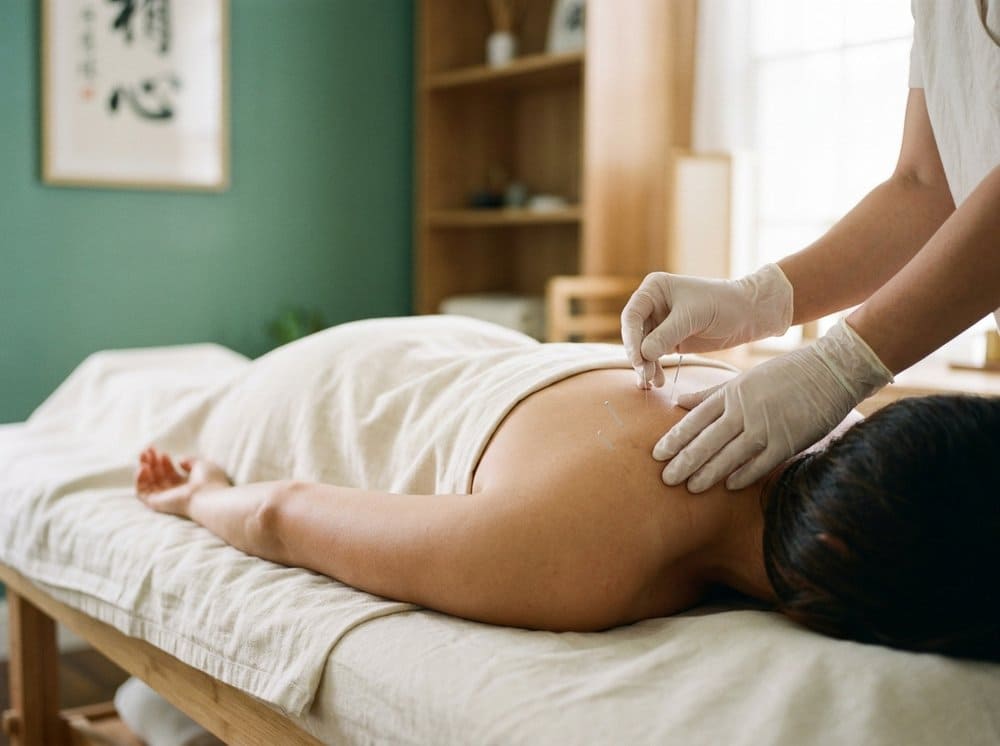
The second patient is a forty-year-old architect with a flared right knee after a weekend tennis match in Alabang. The joint is red, hot, swollen, and exquisitely tender — he cannot bear even a light sheet resting on it at night. His tongue is red with a yellow coating; his pulse is rapid and slippery. This is wind-heat bi. Applying a warm compress here would be a mistake. Treatment calls for clearing heat — ren dong teng, sang zhi, gentle cool-tempered herbs — and, in our clinic, fine needling with a draining technique along the affected meridian. Moxibustion is contraindicated until the heat resolves.
"Before you treat a joint, listen to it. The cold joint wants warmth. The hot joint wants air. Confuse the two, and you will teach your patient that Chinese medicine does not work." — Clinical note, passed down in our family line since my great-grandfather's practice in Fujian.
Morning stiffness plus afternoon swelling: the damp-cold signature
A specific pattern shows up often enough in our Makati caseload that it deserves a separate note. The patient wakes with stiff knees. By noon the stiffness has eased, but by four in the afternoon the joint is visibly puffy, feels heavy, and aches with a dull, pressing quality. This combination — morning stiffness that yields, followed by afternoon swelling — is a near-textbook signature of damp-cold bi. Dampness is a slow, heavy pathogen; it accumulates as the day goes on, especially in patients who spend long hours sitting in cooled offices. The Philippine Department of Health's musculoskeletal guidance, drawn from rheumatology, captures the stiffness and swelling as separate symptoms. TCM reads them as one coherent story.
The corresponding plan, for that patient, rarely begins with needles. It begins with a conversation about the office thermostat, the evening meal, and whether the feet go bare on cold tile at five in the morning. Our companion piece on why knees ache before the rain covers the climatic half of this picture in more detail.
Pulse and tongue: the two minutes that change the plan
Every first consultation at our clinic includes pulse taking at both radial arteries and a careful look at the tongue. It takes, in trained hands, about two minutes. It tells us more than a pain-score questionnaire ever could.
- Pulse deep, slow, wiry — interior cold, likely cold-damp bi.
- Pulse rapid, slippery, full — damp-heat; moxibustion is off the table.
- Pulse floating, hollow — wind pattern, often migratory pain.
- Tongue pale with teeth marks — spleen qi vacuity; the patient needs tonification, not draining.
- Tongue red with a yellow coat — heat that wants clearing, not warming.
These are simplifications; real tongues and real pulses rarely present in pure form. But the four-pillar exam — looking, listening, asking, palpating — remains the honest clinical foundation of everything we do.
Why differentiation matters for the long arc
Chronic joint pain is, by definition, a long conversation. A patient who receives the correct pattern diagnosis in the first week tends to stabilise within six to twelve sessions. A patient who has been treated for the wrong pattern — warmed when they should have been cooled, drained when they needed tonification — often arrives at our door after a year of disappointing care elsewhere. The joint is unchanged. The confidence in Chinese medicine is not.
We take pattern differentiation seriously because it is the only honest way to do this work. It also explains why two people with the same X-ray will often require different treatments — and why the question "does acupuncture work?" is, without the pattern, unanswerable. A richer version of that debate sits in our honest comparison of acupuncture and physiotherapy.
What a first visit actually looks like
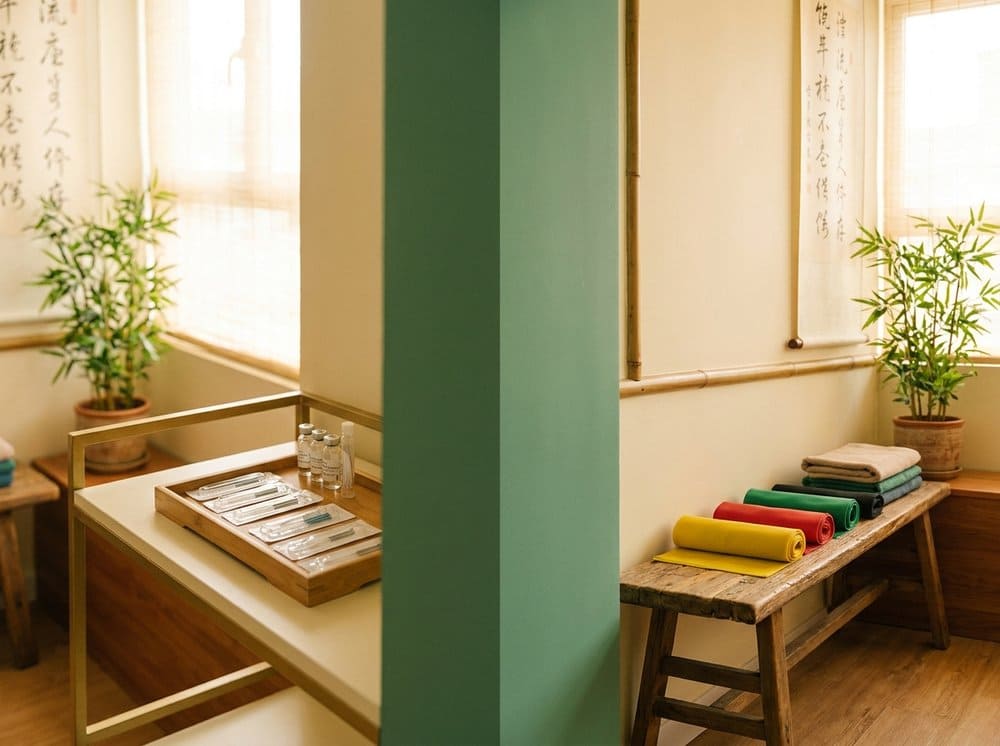
A first consultation at Synergy Meridian runs roughly seventy-five minutes. The first half is conversation and examination — climate history, diet, sleep, the texture and timing of the pain, pulse and tongue. The second half is a gentle initial treatment: fine-gauge needling along the channel, often paired with a brief tuina or, if the pattern is damp-heat, a careful guasha scraping to release the stuck heat. We send most patients home with a short dietary note, not a bag of herbs. Herbs come on the second visit, after we have seen how the body responded to the first intervention. Our introduction to the classical four-examination method covers this sequence in more detail.
A word to the sceptic
None of this asks a patient to set aside their rheumatologist's report, their MRI, or their uric acid panel. Good modern medicine and good classical medicine belong in the same room. What TCM adds is a second reading of the same joint — a reading in which the weather, the meal, the office, and the patient's temperament are all part of the clinical picture. That second reading often changes what we do on a Tuesday afternoon. Sometimes, quietly, it changes the course of a decade of pain.