The history of acupuncture in the Philippines is not the history of a sudden arrival. It is the history of a slow settling — of Fujianese and Cantonese families walking off merchant junks into the narrow streets of Binondo and, within a generation, hanging hand-painted signs that read sinseh above their doorways. The needle came with them. It stayed.
Binondo before the war
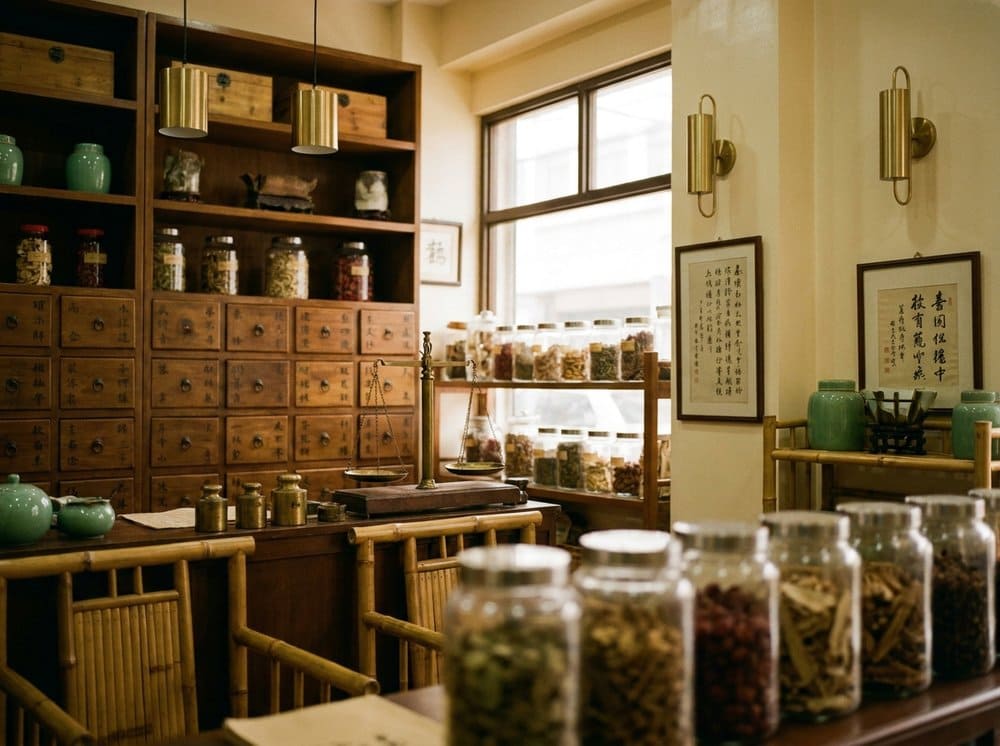
By the late 19th century Binondo — the oldest Chinatown in the world, established on the north bank of the Pasig in 1594 — held perhaps forty Chinese apothecaries. They sold packaged herbs, consulted on pulse and tongue, and, for serious cases, did needling in a back room behind a beaded curtain. Most were shopfront operations run by families who had kept their medicina china training alive through three or four generations of migration. They advertised in Hokkien, not Spanish; their clientele was the Chinese community, the mestizo merchant class, and a quiet stream of Filipino patients who had exhausted what the Spanish farmacias could offer.
One well-known patient was José Rizal himself. During his stays in Manila he consulted Chinese physicians for recurring headaches and eye strain — a detail preserved in letters to his family that biographers, until recently, tended to dismiss as anecdote. It is not anecdotal. It is representative. Educated Filipinos of Rizal's generation moved fluidly between Spanish physicians, Chinese sinsehs, and the village hilot. None of the three traditions had a monopoly on the body.
What the war took, and what survived
The 1941–1945 occupation devastated Binondo. Shops were burned, records lost, families scattered to the provinces. When the survivors came back in 1946 the Chinese apothecary trade rebuilt itself more slowly than the restaurant trade, and more privately. For three post-war decades acupuncture in the Philippines was essentially underground — a service you asked for by name, from a practitioner whose address you learned from a relative. There was no regulation, no licensing, no formal training pathway. There were, however, remarkable practitioners, including the physician who trained my grandfather in Manila in 1958.
Our own clinic's story begins in this period. I have written about it separately in the four-generation account of our family's journey from Fujian to Binondo to Makati, and I will not rehearse it here. What matters for the public history is that dozens of small clinics like ours kept the needle tradition alive through the Marcos years, largely unremarked by the mainstream Philippine medical establishment.
The 1970s opening
Two things changed the landscape in the 1970s. The first was Nixon's visit to China in 1972, which brought the phrase "acupuncture anesthesia" into Western consciousness almost overnight. The second was the Marcos administration's normalisation of diplomatic relations with Beijing in 1975, which made Chinese medical exchange programmes possible for the first time in a generation. A handful of Filipino physicians and a slightly larger handful of Filipino-Chinese practitioners went to Beijing, Guangzhou, Shanghai, or Nanjing for formal training and came back with certificates.
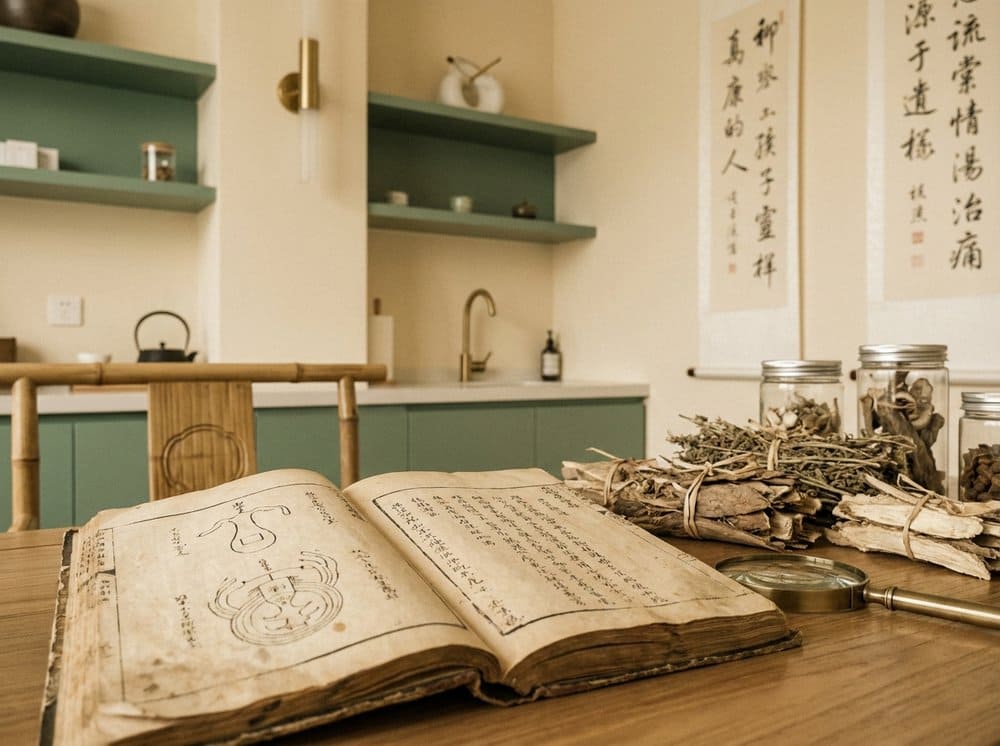
The Huangdi Neijing writes that the sage physician "treats disease before it has taken form." For a hundred years Binondo sinsehs did exactly this for their neighbours, with no law to protect them and no law to stop them. The 1997 Act simply acknowledged what the city already knew.
The 1997 PITAHC Act
The legal turning point was Republic Act 8423 — the Traditional and Alternative Medicine Act — signed in December 1997. It established the Philippine Institute of Traditional and Alternative Health Care (PITAHC) as a government agency with a mandate to research, promote, and eventually regulate traditional medicine practices including acupuncture, herbal medicine, chiropractic, and hilot. For the first time, a Filipino patient could speak of going to an acupuncturist without the implicit apology that had followed the word for a hundred years.
PITAHC accreditation came later and continues to evolve. Today a Philippine acupuncture clinic operating responsibly is expected to hold PITAHC registration, comply with DOH Administrative Order 2018-0017 on traditional health care facilities, and — if it serves the HMO-insured professional population of Makati as ours does — integrate with Maxicare, Medicard, or Intellicare direct-billing. These are not cosmetic requirements. They represent a genuine convergence between Chinese clinical tradition and the Philippine health system. The practical shape of that convergence — how our Makati practice now sits alongside orthopaedic and physiotherapy work — has been quietly rewriting what a chronic pain consultation in Manila looks like.
What Filipino acupuncture looks like now
Contemporary Philippine acupuncture is not a transplant. It is a Filipino practice with Chinese roots, shaped by three local realities: the tropical climate (which favours certain patterns of meridian work over others), the strong HMO culture (which means patients expect insurance-compatible documentation), and the Filipino-Chinese kitchen (which gives herbal consultation a natural cultural home). Needling technique is classical; diagnostic pacing is clinical and unhurried; and patient education is explicit in a way that our grandparents' generation would have found strange.
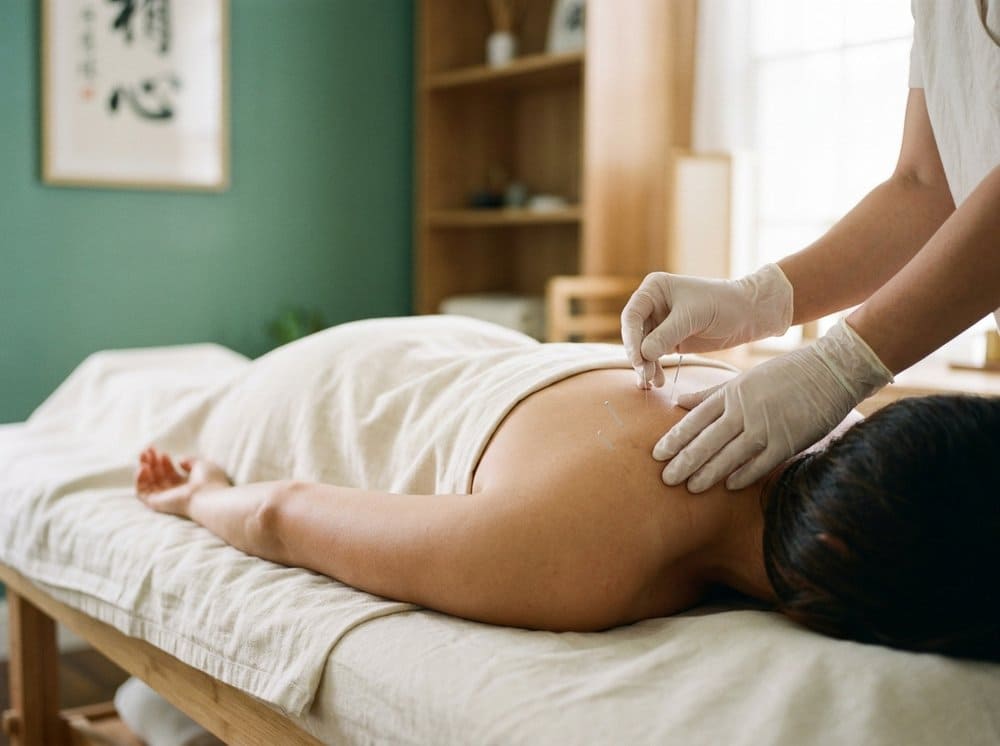
A good Makati clinic today will take a careful intake, do pulse and tongue diagnosis, explain findings in plain English and either Tagalog or Hokkien as the patient prefers, and — importantly — refer out to rheumatology, orthopaedics, or endocrinology when a case calls for it. That last piece is new. It is also, in my view, the single most important legacy of the 1997 Act. It moved Philippine acupuncture from the private back room into the public conversation.
A last note for the curious
If you are a patient new to Chinese needling and you are reading this with ordinary scepticism, the scepticism is welcome. The tradition has survived a century of Philippine upheaval because it does not require belief. It requires only that the practitioner read the body carefully and that the patient return, quietly, a few weeks later, to report what has changed. Binondo's apothecaries understood this. Their descendants, now scattered across Makati and Quezon City, still do.